

19 Nov Sunflower seeds in salads: how to use them
Sunflower seeds in salads: how to use them
Adding sunflower seeds to salads is one of those small touches that changes the whole dish: they bring a gentle crunch, a lightly toasted flavour and a good dose of unsaturated fats, vitamin E and magnesium. One or two tablespoons of shelled, unsalted seeds are enough to give a simple salad more texture and make it more complete. In this guide we cover how much to use, how to toast them for more flavour, what they pair with best, what they actually provide according to food composition data, and how to store them so they do not go rancid.
Here we only cover sunflower seeds. Nuts such as walnuts, cashews or peanuts have different uses and profiles and deserve an article of their own.
In this article: why they work in a salad, what they provide, how much to add, how to prepare them, pairings, an example from our menu, allergies, storage and frequently asked questions.
Why sunflower seeds work in a salad
Texture
A salad with nothing crunchy quickly becomes monotonous. Shelled sunflower seeds add a fine crunch, softer than a large nut, that spreads evenly across the plate and turns up in every bite.
Flavour
Raw, they taste mild and slightly milky; toasted, they develop nutty notes reminiscent of hazelnut. They are subtle enough not to compete with the other ingredients and tasty enough to be noticed.
Convenience
There is no need to shell, chop or cook them (although toasting improves them). They keep well, are easy to find in any supermarket and are affordable. They are probably the easiest crunchy topping you can keep in the cupboard.
What sunflower seeds provide
Sunflower seeds are an oilseed: most of their energy comes from fat, mainly unsaturated. They also provide protein, fibre and several micronutrients. These are approximate values for shelled, dried, unsalted sunflower seeds, based on the US Department of Agriculture’s food composition database (USDA FoodData Central), compared with the nutrient reference values (NRV) set by EU Regulation 1169/2011 for labelling.
| Nutrient | Per 100 g (approx.) | Per 15 g portion (approx.) | % NRV in 15 g |
|---|---|---|---|
| Energy | 584 kcal | 88 kcal | — |
| Fat | 51 g | 7.7 g | — |
| Protein | 21 g | 3.1 g | — |
| Fibre | 8.6 g | 1.3 g | — |
| Vitamin E | 35 mg | 5.3 mg | 44% |
| Magnesium | 325 mg | 49 mg | 13% |
| Thiamin (vitamin B1) | 1.5 mg | 0.22 mg | 20% |
| Copper | 1.8 mg | 0.27 mg | 27% |
| Selenium | 53 µg | 8 µg | 14% |
Values vary with variety, origin and processing. Salted roasted seeds also contain a considerable amount of salt, so for salads it is best to choose unsalted ones.
The standout nutrient is vitamin E: a small portion covers a meaningful share of the daily reference value. Vitamin E contributes to the protection of cells from oxidative stress, one of the health claims authorised in the European Union. Beyond that, there is no need to exaggerate: sunflower seeds add nutrients to the dish, but they are not a miracle food.
How many sunflower seeds to add to a salad
Because they are very energy-dense, quantity matters. As a guide, one or two tablespoons (about 10 to 15 grams) per salad are enough to notice the crunch and flavour without making the dish too calorific. The WHO recommends that dietary fat should come mainly from unsaturated sources such as nuts and seeds, and sunflower seeds fit that advice when eaten in sensible amounts.
If your salad already has another significant source of fat, such as avocado, cheese or a generous oil-based dressing, stick to the lower end of that range.
How to prepare sunflower seeds for salads
Choose well
For salads, the best option is shelled seeds, raw or toasted, with no added salt. Check the label: some contain added salt or oils. If you can only find salted ones, use fewer of them and cut back on salt in the dressing.
Toast them in a pan
Toasting them at home greatly intensifies their flavour. Put the seeds in a dry frying pan over a medium heat and stir constantly for 3 to 5 minutes, until lightly golden and smelling toasty. Transfer them to a plate straight away: if they stay in the hot pan, they keep cooking and can turn bitter.
A spiced version
At the end of toasting you can add a pinch of paprika, curry powder, cumin or a few drops of soy sauce (stirring quickly until it evaporates). That gives you a topping with more character.
Add them at the end
Like any crunchy ingredient, seeds soften if they sit in the dressing for too long. Scatter them over just before serving.
Pairings that work
With sun-dried tomatoes
An excellent match: sun-dried tomatoes bring an intense, sweet and slightly sharp flavour, and the seeds balance it with their mildness and crunch. If the tomatoes are in oil, drain them a little so you do not add too much fat.
With leafy greens and fruit
Mixed leaves, rocket or spinach with mango, apple or pear, toasted seeds and a balsamic or mustard vinaigrette. The sweet and crunchy contrast works really well.
With pasta or grains
In pasta, quinoa or rice salads, sunflower seeds add the texture that is sometimes missing. They go especially well with chicken, roasted vegetables and lemon-based dressings.
With pulses
In a lentil or chickpea salad, a small handful of seeds adds contrast. It is a good way to round off a plant-based dish.
In a poke bowl
Sesame is the classic, but sunflower seeds are an interesting alternative as a crunchy poke topping, especially with quinoa or mixed-leaf bases.
An example from our menu: Chicken Salad
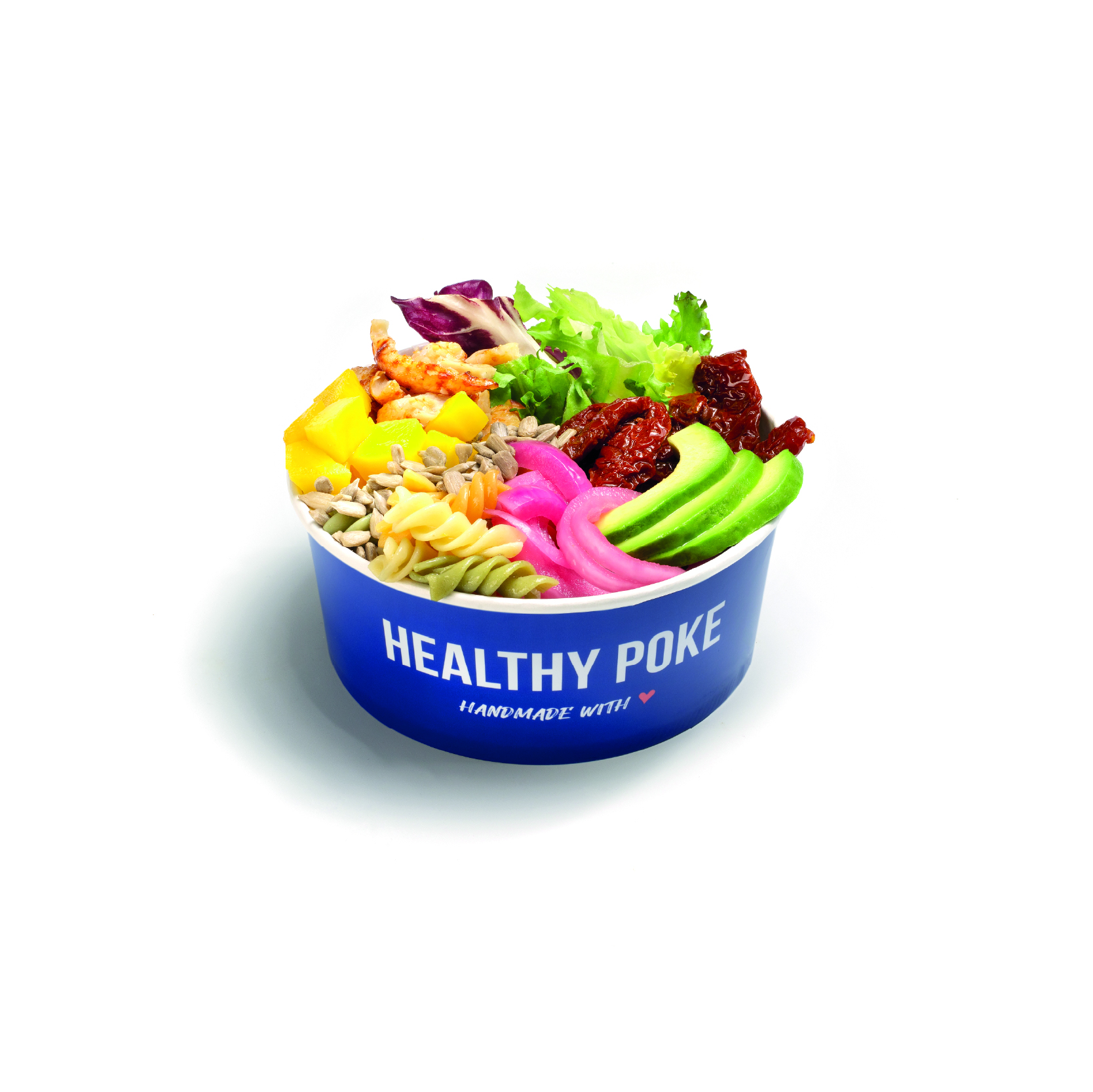
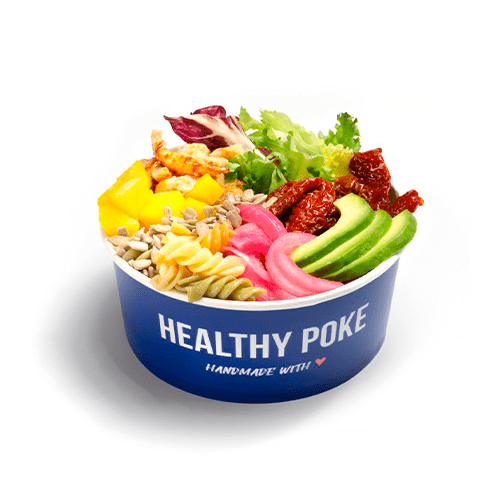
At Healthy Poke we use sunflower seeds in our Chicken Salad: fusilli pasta salad with mixed leaves, avocado, mango, Mediterranean chicken, sunflower seeds, sun-dried tomatoes in oil and balsamic vinaigrette. It is a good example of everything above: the seeds bring the crunch, the sun-dried tomatoes the intense contrast and the mango the sweet touch. You can check its current ingredients and allergens on our menu.
Allergies and precautions
Sunflower seeds are not among the 14 allergens that must be declared in the European Union and the UK, but allergies to them do exist, sometimes severe. They are also often processed in facilities that handle tree nuts, peanuts or sesame, so packs may carry “may contain” warnings. If you have a food allergy, always check the label and speak to your allergist.
Bear in mind too that whole seeds can be a choking hazard for young children.
How to store sunflower seeds
Because they are rich in unsaturated fats, sunflower seeds go rancid fairly easily when exposed to air, light or heat. To keep them in good condition:
- Store them in an airtight container in a cool, dry, dark place.
- If you buy a large amount or the weather is warm, the fridge extends their shelf life.
- Seeds toasted at home keep well for a few days in a closed jar; toast small batches at a time.
- If they smell like paint or taste bitter, they are rancid and should be thrown away.
Three sunflower seed salads to try this week
- Autumn salad: mixed leaves, diced roasted pumpkin, crumbled fresh cheese, a few slices of apple, toasted sunflower seeds and a honey mustard vinaigrette. It works both warm and cold.
- Packed-lunch pasta salad: short pasta, drained sun-dried tomatoes, rocket, strips of grilled chicken, olives and seeds added at the last moment. Carry the seeds in a separate pot so they are still crunchy at lunchtime.
- Green bowl: baby spinach, avocado, cucumber, edamame, quinoa and sunflower seeds with a lemon and olive oil dressing. A complete, fresh dish with plenty of contrasting textures.
The rule is the same for all three: one or two tablespoons of seeds per portion, added just before eating. If you are batch-preparing lunches for several days, toast one small jar of seeds at the start of the week and keep it sealed so they stay crisp.
Common mistakes
- Using salted seeds: they add a lot of salt to the dish without you noticing.
- Adding too many: they are very energy-dense. One or two tablespoons are enough.
- Toasting them on a high heat: they burn on the outside and turn bitter.
- Adding them too early: they lose their crunch.
Frequently asked questions
Is it better to use raw or toasted sunflower seeds in a salad?
Both work. Raw seeds taste milder; toasted ones are more intense and crunchier. Toasting them at home without oil or salt gives you more control over the result.
Are sunflower seeds fattening?
No single food makes you gain weight on its own; what matters is your overall diet. That said, sunflower seeds are very energy-dense, so use them as a topping in small amounts rather than as a main ingredient.
Can I swap sunflower seeds for pumpkin seeds?
Yes. Pumpkin seeds have a slightly stronger flavour and a green colour that looks great on the plate. Use them in exactly the same way.
Are sunflower seeds suitable for people with a nut allergy?
They are not a tree nut, but they may contain traces from shared processing facilities, and a specific sunflower seed allergy also exists. Check the label and speak to your allergist.
Try them in your next salad
If you want to see what a good crunch can do, order our Chicken Salad or browse all the salads on our menu for collection or delivery.