

05 Nov Chickpeas in salads: fibre, protein and combinations
Chickpeas in salads: fibre, protein and combinations
Adding chickpeas in salads is one of the simplest ways to turn a plate of vegetables into a complete, filling meal. They bring fibre, plant protein and slow-release carbohydrates, keep well in the fridge and go with almost any dressing. In this guide we explain how much to use, how to prepare them so they taste great, which vegetables and dressings work best, and how to bring them into a bowl or a poke without making the dish feel heavy.
If you want the quick version: around 150 grams of cooked chickpeas (roughly a small bowlful) with leafy greens, cherry tomatoes, something crunchy and a sharp dressing already makes a balanced salad. Everything else is a variation on that.
In this article: why pulses work so well in salads, what a sensible portion looks like, how to prepare chickpeas, vegetable pairings, dressings that work, an example from our menu, allergens and storage, and frequently asked questions.
Why chickpeas work so well in a salad
A salad made only of leaves and raw vegetables is light, but it often falls short as a main meal: two hours later you are hungry again. Chickpeas fix that for three reasons.
Fibre that keeps you full
Cooked chickpeas provide around 7 to 8 grams of fibre per 100 grams, according to standard food composition tables. The European Food Safety Authority (EFSA) considers an intake of about 25 grams of fibre a day adequate for adults, and many people in Europe fall short of that. A portion of chickpeas in your salad covers a good share of that target, especially alongside fresh vegetables.
The World Health Organization, in its guidance on a healthy diet, specifically includes pulses such as lentils and beans among the foods that should be part of everyday eating, together with fruit, vegetables, nuts and whole grains.
Plant protein in a practical format
Every 100 grams of cooked chickpeas contains roughly 8 to 9 grams of protein. On their own they do not replace other sources, but they add up, and in a salad that also includes an egg, a little cheese, chicken or tofu, they help make the dish genuinely nourishing. We are not going to compare plant proteins here: what matters is how to use chickpeas practically in a salad.
Texture and a neutral flavour
Chickpeas have a mild, slightly nutty flavour and a firm texture that does not fall apart when tossed. They soak up dressings very well, which makes them ideal for salads prepared a little in advance. Roast them and they turn crunchy, a great swap for croutons.
How many chickpeas should you add to a salad?
Spain’s Food Safety and Nutrition Agency (AESAN) recommends eating pulses at least four times a week. As a general guide, an adult portion of pulses is around 50 to 60 grams dry, which is about 150 grams once cooked. These are rough figures: everyone’s needs vary with age, activity and health, and if you follow a specific eating plan your healthcare professional should adjust it.
| Role in the salad | Approximate amount (cooked) | What it does |
|---|---|---|
| Main ingredient | 120–150 g | A salad as a complete meal, with leaves and vegetables |
| Alongside another protein | 60–80 g | Salad with chicken, egg, salmon or tofu |
| Crunchy topping (roasted) | 2–3 tablespoons | Adds texture instead of croutons |
A handy rule: if the salad is your main meal, aim for chickpeas to take up about a quarter of the plate, vegetables half, and split the rest between another protein, a healthy fat (olive oil, avocado, seeds) and, if you like, a grain.
How to prepare chickpeas for salads
Tinned or jarred chickpeas
They are the quickest option and perfectly fine. Drain and rinse them well under the tap: this removes some of the salty liquid they are packed in and improves the texture. Let them drain for a few minutes or pat them dry with kitchen paper before dressing them; if they are wet, the dressing gets diluted.
Chickpeas cooked at home
If you cook them yourself, soak them overnight (8 to 12 hours) and simmer until tender but still whole. For salads, you do not want them too soft. You can cook a larger batch and keep it in the fridge for several days.
Roasted chickpeas
Dry them thoroughly, toss them with a teaspoon of olive oil and spices (paprika, cumin, garlic powder or curry) and roast at about 200 ºC for 25 to 35 minutes, stirring halfway. Add them to the salad just before serving so they stay crisp.
A quick marinade
One step that makes a big difference: mix the chickpeas with the dressing 15 to 20 minutes before assembling the salad. That way they absorb flavour all the way through and do not taste bland next to the other ingredients.
Vegetable pairings that work
Chickpeas are versatile, but some combinations stand out for flavour, colour and texture.
With leafy greens and cherry tomatoes
The classic: a base of leaves (baby spinach, rocket, lamb’s lettuce or lettuce), halved cherry tomatoes and chickpeas. Tomatoes add juiciness and a touch of acidity that balances the floury texture of the pulse. If you want to know more about spinach as a salad base, we have a dedicated article on spinach in poke bowls.
With roasted vegetables
Roasted pumpkin, sweet potato, peppers or aubergine, warm or cold, pair beautifully with chickpeas. It is a good choice for the colder months, when you fancy something more comforting than a cold salad.
With crunch
Cucumber, grated carrot, thinly sliced red onion, radishes or raw pepper add freshness and contrast. Seeds (sesame, sunflower or pumpkin) bring extra crunch.
With a sweet touch
Sweetcorn, pomegranate, mango or a few raisins work very well with chickpeas, especially if the dressing has some citrus or mustard.
Dressings for chickpea salads
Because chickpeas have a neutral flavour, the dressing sets the character of the dish. Here are a few simple ideas:
| Dressing | Base ingredients | Goes well with |
|---|---|---|
| Lemon vinaigrette | Olive oil, lemon juice, salt, pepper | Leafy greens, tomato, cucumber |
| Honey mustard | Oil, mustard, a little honey, vinegar | Roasted vegetables, sweetcorn, chicken |
| Yoghurt and herbs | Plain yoghurt, lemon, mint or dill | Cucumber, red onion, spices |
| Tahini | Tahini, lemon, water, garlic | Roasted vegetables, pomegranate |
| Cumin vinaigrette | Oil, sherry vinegar, cumin, paprika | Roasted chickpeas, peppers |
Bear in mind that tahini contains sesame and yoghurt contains milk, two of the allergens that must be declared in the European Union.
From salad bowl to poke: an example from our menu
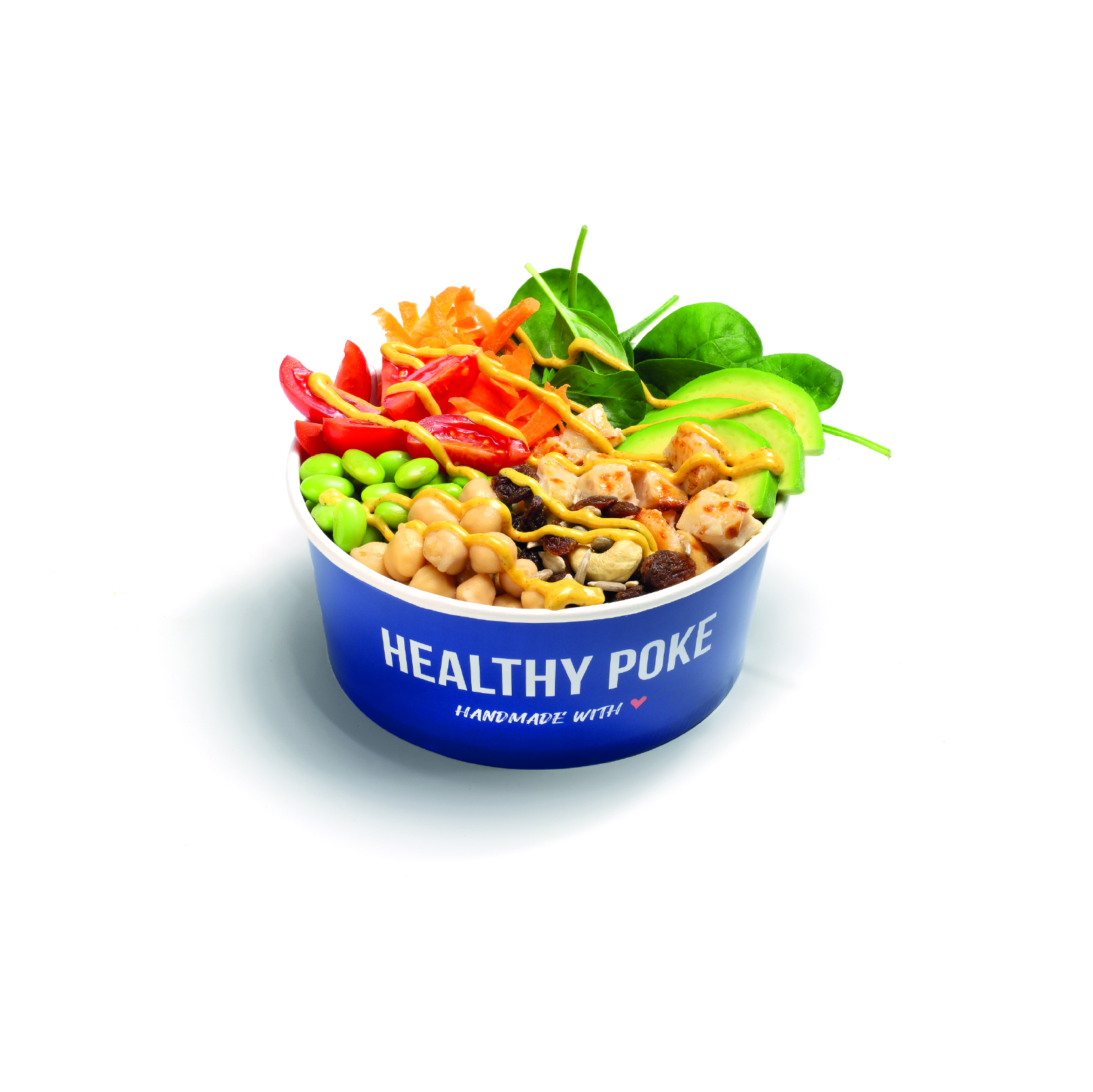
At Healthy Poke, chickpeas have their place too. A good example is the Sweety Protein Salad, which combines chickpeas with spinach, avocado, walnuts, edamame, roast chicken, cherry tomatoes and carrot, finished with the sweet touch of our mango curry sauce. It is exactly what we have described in this article: a filling pulse base, another protein to complement it, fresh vegetables, something crunchy and a dressing with contrast. You can check its current ingredients, allergens and availability on our menu.
If you prefer to build your own bowl, the idea is the same as at home: a base, a protein, several vegetables, a crunchy touch and a sauce. Our guide to poke ingredients has plenty of options to combine.
Common mistakes when adding chickpeas to salads
- Not draining them properly: leftover water dilutes the dressing and makes the salad soggy.
- Dressing them at the last minute: they end up bland. A short marinade beforehand is better.
- Adding too many: if the pulse dominates, the dish gets heavy. Balance it with plenty of vegetables.
- Forgetting contrast: soft texture plus soft leaves is dull. Add something crunchy and something sharp.
- Adding roasted chickpeas too early: they lose their crunch once they meet the dressing.
Allergens and storage
Chickpeas are not among the 14 allergens that must be declared in the European Union, although some people allergic to other legumes (such as peanuts or soya) may react to them. If you have a diagnosed allergy, check with your allergist. Look at your dressings too: mustard, sesame, milk and nuts are common allergens.
As for storage:
- Cooked chickpeas keep in the fridge, in a closed container, for about 3 or 4 days.
- Do not keep an opened tin in the can itself: transfer the chickpeas to an airtight container.
- An assembled salad keeps better if you store the dressing and leaves separately and combine them when you eat.
- Cooked chickpeas can be frozen in portions, well drained, for several months.
Three quick ideas for this week
- Mediterranean salad: chickpeas, cherry tomatoes, cucumber, red onion, olives and lemon vinaigrette.
- Warm autumn bowl: chickpeas, roasted pumpkin, baby spinach, pumpkin seeds and tahini dressing.
- Crunchy salad: mixed leaves, grated carrot, sweetcorn, paprika-roasted chickpeas and mustard vinaigrette.
Frequently asked questions
Should you rinse tinned chickpeas before adding them to a salad?
Yes, it is a good idea. Rinsing removes some of the salt from the packing liquid and gets rid of the tinned taste. Then dry them well so the dressing sticks.
Can you make chickpea salads ahead for several days?
Yes. Dressed chickpeas keep well in the fridge for a couple of days. Leaves do not last as long: store them separately and mix everything when you are ready to eat.
Do chickpeas in salads feel heavy?
It depends on the person and the amount. If you are not used to eating pulses, start with small portions and increase gradually; rinsing them well and pairing them with plenty of vegetables usually helps. If you have persistent digestive discomfort, speak to a healthcare professional.
Can I use chickpeas in a poke bowl?
Of course. They work as a plant protein or alongside another protein, and pair well with citrus or sesame-based sauces.
Order your chickpea salad
If you do not feel like cooking today, we have you covered: take a look at our menu, choose your favourite salad or bowl and order it for collection or delivery.