

12 Nov Teriyaki, yakiniku and soy sauce: what is the difference?
Teriyaki, yakiniku and soy sauce: what is the difference?
Teriyaki vs yakiniku sauce, or just soy sauce? All three come from Japanese cooking, all three are built on soy and all three often turn up in a poke bowl, but they do not taste the same or suit the same ingredients. The short answer: soy sauce is the saltiest and simplest; teriyaki is reduced soy with a sweet touch and a glaze-like texture; and yakiniku is a Japanese barbecue sauce, more complex, with garlic, sesame and fruity notes.
In this article we compare their flavour, typical ingredients, what to look for on the label (salt and sugars) and what to pair them with in your bowl. We focus only on these sauces: for a broader look at everything that goes into a poke, see our guide to poke ingredients.
In this article: what each sauce is, a comparison table, salt and sugars, pairings with proteins and bases, how to use them without overdoing it, allergens, storage and frequently asked questions.
What each sauce is
Soy sauce
This is the foundation of the other two. It is traditionally made by fermenting soya beans, often with wheat, salt and water. The result is a dark, thin and very savoury liquid with lots of umami and a fair amount of salt. In a poke it adds intensity in tiny amounts, and it is the most “neutral” option in the sense that it adds no sweetness.
There are variations: reduced-salt soy sauce, which keeps the flavour with less sodium, and tamari, which is traditionally made with little or no wheat (although you should always check the label if you avoid gluten).
Teriyaki sauce
In Japanese, “teriyaki” describes a cooking method: “teri” means shine and “yaki” means grilled or roasted. The sauce is usually made with soy sauce, mirin (a sweet rice wine), sake and sugar, reduced until slightly thick and glossy. It tastes sweet and salty at the same time, and its main job is to glaze: to coat the protein and give it that lacquered finish.
Yakiniku sauce
“Yakiniku” literally means “grilled meat” and is the name for Japanese barbecue. The sauce used to dip or marinate that meat usually contains soy sauce, sugar or grated fruit (often apple or pear), garlic, ginger, sesame and, in some recipes, mirin or miso. It is more complex than teriyaki: less glossy, more aromatic and with a toasty background from the sesame.
What about Asian vinaigrette?
It is not one of the three main sauces, but it deserves a mention because it is often the lighter alternative. It typically combines rice vinegar, a little soy sauce, oil (often sesame), ginger and sometimes citrus. It brings acidity and freshness rather than sweetness, and works very well in poke bowls packed with vegetables.
Teriyaki, yakiniku and soy: a quick comparison
| Soy sauce | Teriyaki | Yakiniku | |
|---|---|---|---|
| Main flavour | Salty, umami | Sweet and salty | Salty, sweet, garlic and sesame |
| Texture | Thin | Thick, glossy | Medium-thick |
| Typical ingredients | Soya, wheat, salt, water | Soy sauce, mirin, sake, sugar | Soy sauce, sugar or fruit, garlic, ginger, sesame |
| Typical use | Dressing, dipping | Glazing, marinating | Marinating, dipping grilled meat |
| Added sugar | Usually not | Yes | Yes, in most recipes |
| Best with | Salmon, tuna, avocado | Chicken, tofu, cooked salmon | Beef, chicken, mushrooms, tofu |
Bear in mind that this table describes traditional recipes. Every brand and every kitchen has its own formula, so the exact composition can only be confirmed by reading the specification or label of the specific product.
Salt and sugars: what to check on the label
Salt
All three sauces start from soy sauce, so all three contribute salt. The World Health Organization recommends that adults have less than 5 grams of salt a day, which is equivalent to less than 2 grams of sodium. A single tablespoon of standard soy sauce can provide a significant share of that, which is why it is worth using it sparingly.
To compare products, look at the “salt” line in the nutrition information per 100 ml or per 100 g. In the European Union and the UK, labels show salt rather than sodium; if you ever see a sodium figure, multiply it by 2.5 to get the salt equivalent.
Sugars
Teriyaki and yakiniku usually contain added sugar, honey or fruit to give them their sweetness. That is not a problem in a sensible portion, but it is worth knowing if you are watching your intake of free sugars. The WHO recommends keeping free sugars below 10% of total daily energy. Again, the label has the final say: look for the “of which sugars” line.
Which is the lightest?
There is no universal answer because it depends on the recipe, but as a general rule reduced-salt soy sauce or an Asian vinaigrette with only a little soy tend to be the lighter options. What changes the result most is not which sauce you choose, but how much of it you use.
What to pair each sauce with in your poke
Soy sauce: for raw fish and clean flavours
Soy sauce is the natural partner for raw salmon and tuna because it brings out their flavour without masking it. It goes well with avocado, cucumber, wakame and sesame seeds, and works best in bowls with a sushi rice base, where the rice already adds a hint of sweetness.
Teriyaki: for cooked proteins
Teriyaki shines with cooked proteins: grilled chicken, stir-fried tofu or seared salmon. Its sweetness pairs with fresh, slightly sharp ingredients such as mango, edamame or crispy onion, which balance the intensity of the glaze.
Yakiniku: for bold flavours
With its barbecue profile, yakiniku suits grilled meats, chicken and mushrooms, as well as firm tofu. Carrot, cucumber and green shoots work well alongside it to freshen things up. If you use it with raw fish, go easy, as it can dominate the dish.
Asian vinaigrette: for vegetable-heavy bowls
If your bowl is full of leaves, red cabbage, carrot or edamame, an Asian vinaigrette adds freshness without weighing it down.
An example from our menu
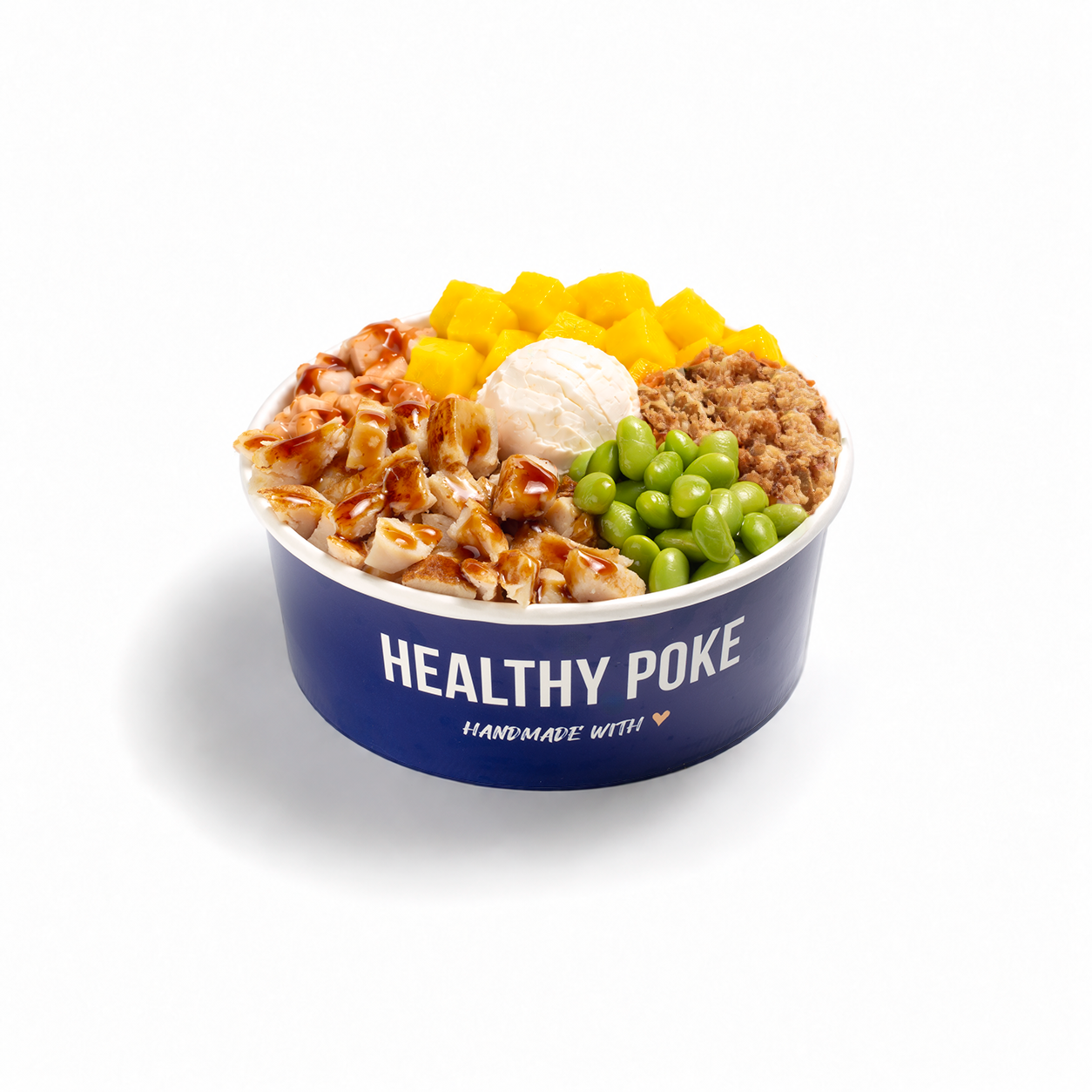
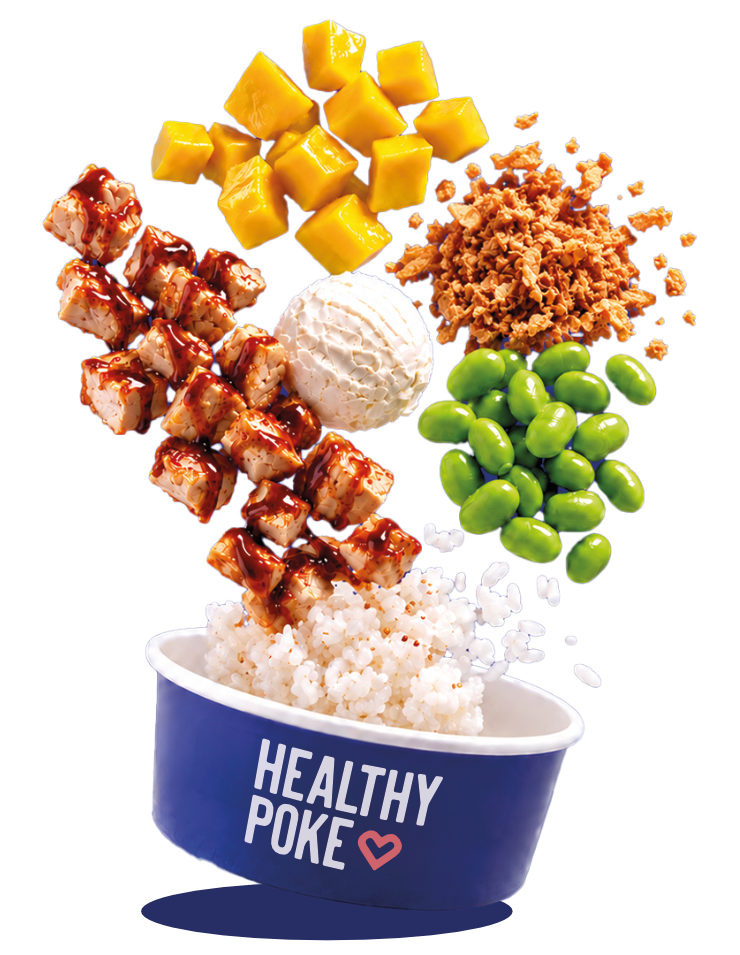
At Healthy Poke the clearest example is our Chicken Teriyaki: sushi rice, mango, edamame, cream cheese, crunchy onion and chicken with teriyaki sauce. It is exactly the kind of combination that suits this sauce: a glazed cooked protein, a sweet, fresh note from the mango and texture from the crispy onion.
If you prefer soy sauce, you can add it when you build your own poke. Available sauces can vary from restaurant to restaurant, so we recommend checking the up-to-date menu before you order.
How to use these sauces without overdoing it
- Ask for it on the side: having the sauce in a separate pot lets you control how much you use.
- Start with one tablespoon: in a medium bowl that is usually enough for flavour.
- Add some acidity: a few drops of lime or lemon lift the flavour so you need less sauce.
- Use umami from other ingredients: seaweed, toasted sesame or mushrooms add flavour without as much salt.
- Pick one star sauce: mixing soy, teriyaki and spicy mayo in the same bowl multiplies salt, sugar and calories without making the dish taste better.
Allergens
All three sauces contain soya, one of the 14 allergens that must be declared in the European Union and the UK. Standard soy sauce also usually contains wheat and therefore gluten. Yakiniku almost always includes sesame, and some teriyaki and Asian vinaigrette recipes do too. Some commercial versions may contain other allergens, so always check the product information or ask at the restaurant.
Storage
Once opened, shop-bought sauces of this kind generally keep best in the fridge, especially those containing sugar or fruit such as teriyaki and yakiniku. Always follow the instructions on the pack. If you make it at home, keep it in an airtight container in the fridge and use it within a few days.
Quick homemade teriyaki
If you want to control the ingredients, you can make a simple teriyaki at home:
- In a small pan, mix 4 tablespoons of soy sauce (ideally reduced-salt), 2 of mirin, 1 of sake (optional) and 1 teaspoon of sugar or honey.
- Heat over a medium flame until it simmers gently.
- Let it reduce for 3 or 4 minutes, stirring, until it thickens slightly.
- For a thicker sauce, add half a teaspoon of cornflour mixed with cold water and cook for one more minute.
- Let it cool slightly before using. It will thicken a little more as it cools.
Frequently asked questions
Are teriyaki and yakiniku sauce the same thing?
No. Both start from soy sauce and have a sweet note, but teriyaki is a glazing sauce, smoother and glossier, while yakiniku is a barbecue sauce with garlic, sesame and sometimes fruit, and is more aromatic.
Which has more salt, soy sauce or teriyaki?
Generally, soy sauce has more salt per tablespoon because it is not diluted with mirin or sugar. That said, it depends on the brand: compare the salt line on the label.
Can I have these sauces if I have coeliac disease?
Standard soy sauce usually contains wheat. Gluten-free versions exist, such as some certified tamari, but you need to check the label of each product. At the restaurant, always ask about allergens.
Which sauce goes best with a raw salmon poke?
Soy sauce is usually the most balanced choice for raw salmon because it brings out its flavour. Teriyaki works better with cooked or seared salmon.
Taste the difference in your next bowl
The best way to find your favourite is to try them. Take a look at our menu, order a Chicken Teriyaki or build your own poke with the sauce you fancy, for collection or delivery.